



How to Wisely Use Wedding Gift Money for a Strong Future
Newlywed couples, especially tourists and souvenir shoppers passing through London and the UK, often end up with a happy little pile of wedding gift money and a lot of tempting places to spend it. The tricky part is that celebration cash can disappear fast on "just one more" keepsake, upgrades, and last-minute shipping choices, leaving shared priorities feeling fuzzy.
With a calm approach to financial planning for couples, responsible gift spending becomes less about saying no and more about protecting what matters together. A simple plan keeps relationship financial goals steady.
Quick Takeaways for Smart Gift Money Use
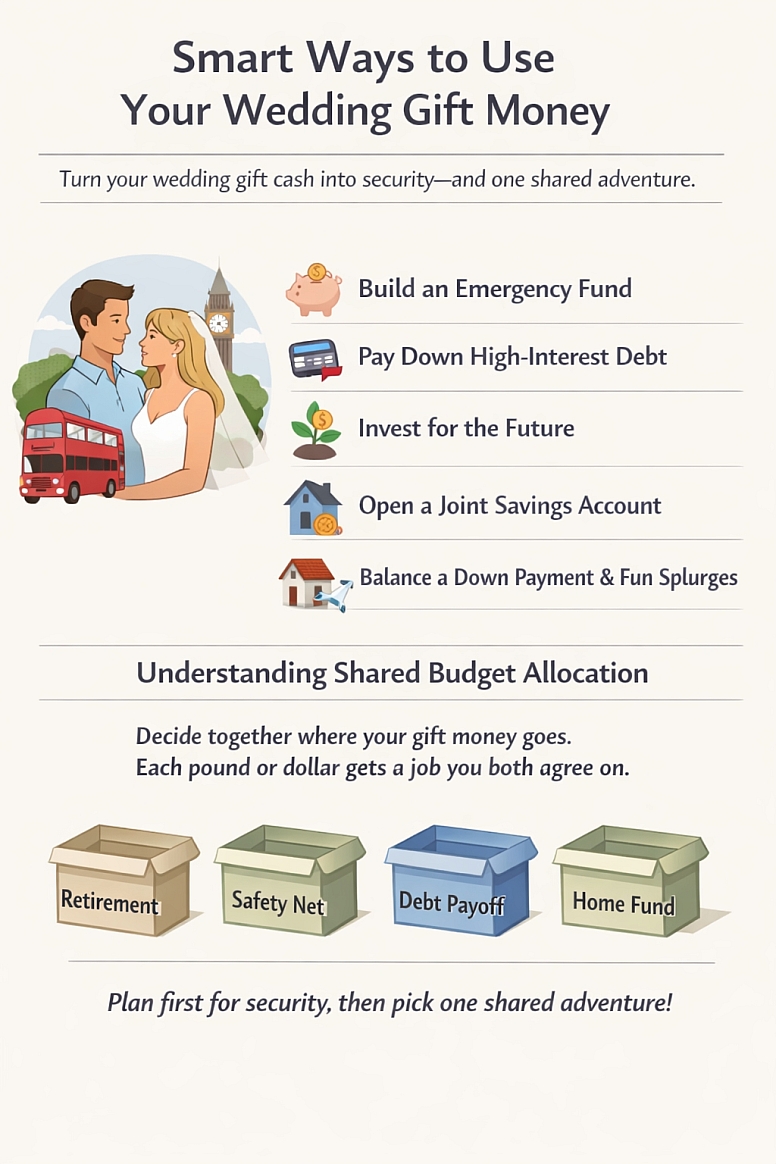
- Start by building an emergency fund, so surprise expenses do not derail your plans.
- Start by paying down high-interest debt to free up cash for shared goals.
- Start by choosing simple investment options that support long-term financial growth.
- Start by adding gift money to a joint savings account to keep future financial goals clear.
- Start by balancing a down payment boost with two fun splurges that still fit your budget.
Understanding Shared Budget Allocation
Shared budget allocation means you and your partner decide together what each part of your gift money is for. It is less about strict rules and more about giving your money to clear jobs you both agree on. That simple habit builds trust and keeps financial responsibility feeling like teamwork.
It matters because money stress can spill into everyday choices, even fun ones like picking affordable souvenirs during your travels. When a financial situation negatively impacts your mental well-being, small spending decisions can feel heavier than they should.
Think of it like planning a souvenir budget with a travel buddy: one envelope for gifts, one for snacks, one for the ride back. You still enjoy the trip, but no one worries about running out of cash. With that mindset, each pound or dollar can support retirement, savings, debt payoff, or a shared goal.
Choose Your Mix: Retirement, Safety Net, Debt, and Home
Your shared budget allocation is like packing cubes for a trip: give every pound or dollar a clear "pocket," and you'll feel calmer spending on what matters. Pick a mix below; there's no one perfect combo, just a plan you can actually stick with.
- Start with a mini emergency savings fund (then grow it): Open a dedicated emergency savings fund and aim for a first target of £/$500–£/$1,000 before anything fancy. This buffer keeps little surprises (car repair, last-minute flight change, vet bill) from turning into credit-card debt. If you're thinking "Do we really need this?", remember that 47% of Americans have sufficient liquidity to cover a $1,000 emergency expense; being in the prepared half is a huge stress reducer.
- Grab any 401(k) match (instant win): If either of you has a workplace retirement plan, set contributions to at least the level that earns the full employer match. That's one of the few "free money" moments in personal finance, and wedding gift money can help you comfortably raise contributions for the next 3–6 months while you adjust. If you don't have a 401(k), use the same idea with any available retirement plan: automate it, then forget it.
- Pick one debt to attack with a simple rule: List debts with balances, interest rates, and minimum payments, then choose either the highest-interest first (saves more money) or the smallest balance first (quick morale boost). Use a chunk of gift money for a lump-sum payment, then commit to a monthly "debt extra" line item in your shared budget allocation. Keep it realistic, something like £/$50–£/$200 each month, so you don't boomerang back to borrowing.
- Create a joint "household" account for boring-but-important bills: Open joint savings accounts or a joint checking account used only for shared costs like rent, utilities, groceries, and transport. Set payday auto-transfers so the bills are "fed" before fun spending happens, like a dependable pet-feeding routine. Keep personal "no-questions-asked" spending separate to reduce friction.
- Start a first home down payment fund with a clear timeline: Decide if "home" is a 2-year goal or a 7-year goal, then name the account something specific like "Down Payment 2028." Automate weekly or monthly transfers, even if it's small, and drop part of your wedding gift money in as a starter deposit. If your timeline is shorter than 3 years, keep this fund in cash savings rather than investments.
- Use a simple split so every gift pound has a job: If you want a plug-and-play starting point, try 40% emergency fund, 30% debt payoff, 20% retirement plans/401(k) investment, and 10% shared goals like a first home down payment. Adjust based on your reality; high-interest debt may deserve more, while stable finances might lean harder into retirement. If you can explain your split in one sentence, it's usually a good sign you'll follow it.
When you've picked your mix, write down two decision rules, like "we talk about any purchase over £/$200" and "we review our budget once a month", so disagreements stay small and solvable, even when goals get big.
Wedding Gift Money Q&A for Calm Money Decisions
Q: What are some practical ways to use wedding gift money to strengthen our financial foundation as a couple?
A: Start by agreeing on two decision rules and a simple monthly budget you can both follow. Then assign the gift money to a short list: starter emergency cash, one debt payoff target, and one shared goal like a future trip or move. Thinking in terms of organizing your money helps you spend with confidence instead of guesswork.
Q: How can we balance setting up savings and investing while still enjoying some of the gift money on memorable experiences?
A: Set a "must-do first" minimum, like one month of expenses in savings, then pick a fixed fun percentage you will not argue about later. Tourists do this instinctively: you buy a few affordable keepsakes and still get home safely, not one giant splurge. Automate the serious part so enjoyment does not become anxiety.
Q: What steps can we take to reduce financial stress by using our wedding gifts wisely?
A: Put the money somewhere separate the same week you receive it, so it does not vanish into daily spending. Schedule a 20-minute monthly check-in and keep it gentle: what worked, what felt tight, what to tweak. Treat the plan like pet care; consistent feeding beats occasional feasts.
Q: How do we prioritize paying off debts versus saving for future goals with the gift money?
A: If any debt has a high interest rate, consider paying that down first while still keeping a small emergency buffer. If debt is low-interest, you may feel steadier building savings and funding near-term goals in parallel. Decide on one rule together, then stick to it for three months before changing anything.
Q: What resources are available for couples who feel overwhelmed managing their finances and want to develop leadership and planning skills to handle financial decisions together?
A: A session with a qualified financial counsellor or planner can turn "we should" into a workable routine with clear roles. If career growth is part of the plan, an accredited online business master's program, such as a master of business administration, can build decision-making skills. Keep it simple: choose one tool, one habit, and one shared goal to practice together.
Turn Wedding Gift Money Into Security and One Shared Adventure
Wedding gift money can feel tricky: spend it now and worry later, or save it and miss the fun. The calm answer is intentional spending, agreeing on priorities that support financial future building and steady relationship financial growth before anything else.
When choices follow that shared "why," the money stops being a debate and starts becoming a plan that fits real life. Spend with intention first, then splurge responsibly on a memory you'll both keep.
Choose one treat this week, set a small UK trip fund or a souvenir budget, so travel experiences feel like an investment in memories, not a setback. That balance builds resilience and connection for everything ahead.










1.1042