


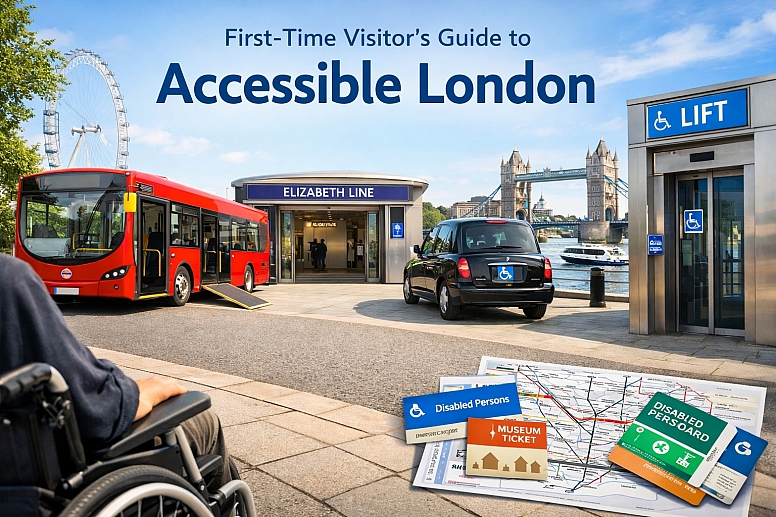
First-Time Visitor's Guide to Accessible London
London has a reputation for cobblestones and ancient tube stations, but the reality for travelers with disabilities is far more encouraging than the myths suggest. With the right planning, this world-class city offers an experience that is genuinely rich, manageable, and rewarding.
Accessible London travel refers to navigating the city's transport, attractions, and accommodations with mobility aids, sensory needs, or other disability-related requirements in mind. Thanks to significant infrastructure investment over the past two decades, a growing number of tube stations, buses, museums, and restaurants now meet modern accessibility standards, making London one of Europe's more disability-friendly capital cities.
The Essentials at a Glance
Here is what every first-time visitor with a disability should know before landing at Heathrow:
- Over 100 London Underground stations now offer step-free access
- All London buses are wheelchair accessible with low-floor entry and ramps
- The majority of London's top museums and galleries are free and fully accessible
- The city's black cabs are legally required to accommodate wheelchairs
- The Disabled Persons Railcard saves eligible travelers one-third off most rail fares
Getting Around London: Accessible Transport at a Glance
|
Transport Mode |
Accessibility Level |
Key Notes |
|
London Buses |
Excellent |
All routes are low-floor, with ramps available |
|
Elizabeth Line |
Excellent |
All stations are fully step-free |
|
London Underground |
Moderate |
100+ step-free stations; check TfL map |
|
Black Cabs |
Very Good |
All licensed cabs are legally wheelchair accessible |
|
River Bus (Thames Clipper) |
Good |
Most piers are accessible; call ahead to confirm |
|
National Rail |
Good |
Passenger Assist booking recommended |
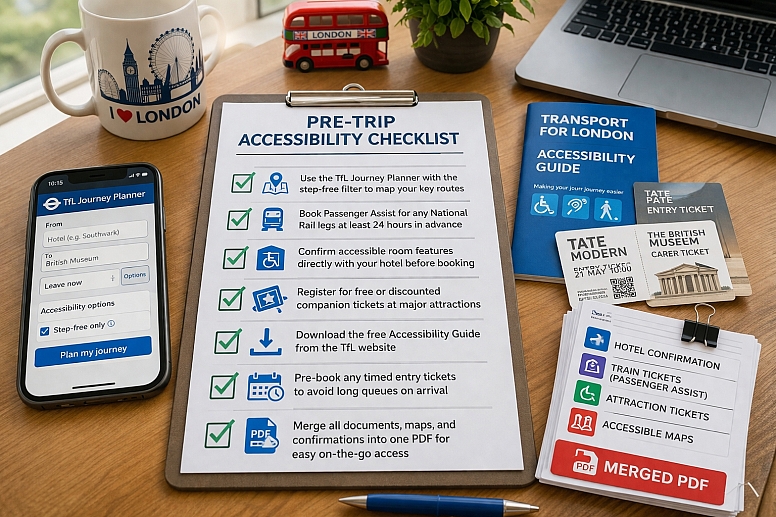
Transport for London's (TfL) free Accessibility Guide and the official TfL Journey Planner both include a step-free filter, letting you build a door-to-door route using only accessible connections before you leave your hotel.
Top Wheelchair-Friendly Attractions in London
London's most iconic sights are also some of its most accessible. These rank among the best options for visitors with mobility needs:
- British Museum: Step-free throughout, free entry, and a wheelchair loan available on-site
- Tate Modern: Fully accessible across all floors via lifts, with accessible restrooms on every level
- The O2 Arena: Dedicated accessible entrances, viewing platforms, and companion ticket discounts
- Hyde Park: Paved paths connect major landmarks, with accessible restrooms near key entry points
- Tower of London: Surface-level areas are accessible; Historic Royal Palaces offers a free companion ticket scheme
- Sky Garden: Step-free access to the viewing floor, with lift entry from ground level
Before you leave, grab a few iconic keepsakes to remember the trip. Click Souvenirs carries a wide range of I Love London gifts that make it easy to bring a piece of the city home.
Organize Your Trip Documents Before You Go
One of the smartest things a traveler with a disability can do before a London trip is to consolidate all essential documents into a single, easy-to-access file. Accessibility maps, hotel confirmation emails, attraction guides, companion ticket printouts, and transport information can quickly pile up across multiple apps, email threads, and loose printouts. Using a free tool to merge PDF files online lets you combine everything into one tidy document you can pull up instantly on your phone or share with a travel companion, cutting out the scramble when you need information quickly on the ground.
Pre-Trip Accessibility Checklist
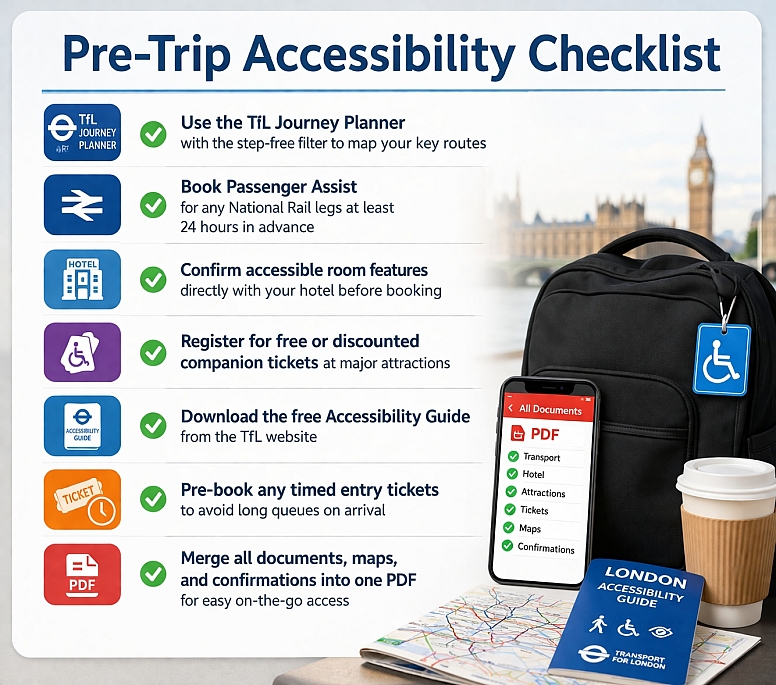
- Use the TfL Journey Planner with the step-free filter to map your key routes
- Book Passenger Assist for any National Rail legs at least 24 hours in advance
- Confirm accessible room features directly with your hotel before booking
- Register for free or discounted companion tickets at major attractions
- Download the free Accessibility Guide from the TfL website
- Pre-book any timed entry tickets to avoid long queues on arrival
- Merge all documents, maps, and confirmations into one PDF for easy on-the-go access
Frequently Asked Questions
Is the London Underground wheelchair accessible? Parts of it are, but not all. Over 100 stations now have step-free access from street to platform, and TfL's free accessibility map identifies each one clearly. The Elizabeth Line and Overground are the most consistently accessible lines for wheelchair users.
Do London attractions offer discounts for disabled visitors? Many do. A significant number of major museums and galleries are free to all visitors, and several paid attractions offer complimentary or discounted tickets for support workers and companions. It is worth checking each venue's website before you book.
What is the best hotel area in London for wheelchair users? The South Bank and Southwark areas sit close to step-free tube stations and several top accessible attractions, including the Tate Modern and Borough Market. The City and Canary Wharf are also strong options given the fully step-free Elizabeth Line access.
Conclusion
London rewards travelers who plan ahead, and for visitors with disabilities, that preparation pays off in a trip that is genuinely enjoyable rather than stressful. The city's accessibility infrastructure has improved dramatically, and with the right tools and information, most of the iconic experiences London offers are well within reach. Start building your accessible London itinerary now and see how much is possible.
LEAVE A COMMENT
Recent Posts








0.9169