



The Londoner’s Slow-Save Plan: Turn Small Wins Into a Dream Trip
Saving for a holiday when you live in London can feel like trying to fill a bathtub with the plug half out. Rent, travel, and “just a quick coffee” have a way of eating spare cash before you can name it. Still, gradual saving works—especially when you make it automatic, visible, and a little bit satisfying.
This guide is about making a getaway possible without turning life into a spreadsheet punishment.
In plain terms
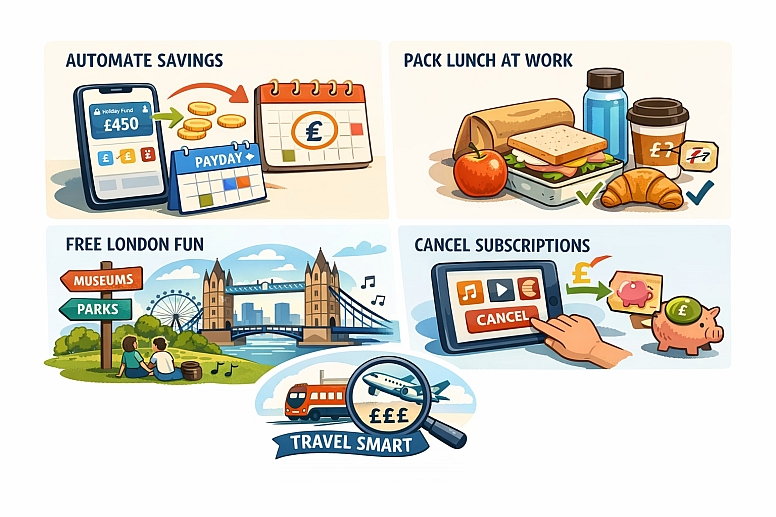
Set a clear trip target, automate a small weekly transfer, and build a few London-specific “micro-savings” into your routine (travel, food, subscriptions). Aim for progress you can repeat on a normal week, not a heroic month you’ll never recreate. Then add one or two travel-cost hacks—because lowering the price of the trip counts as saving too.
The real obstacle isn’t discipline, it’s leakage
Problem: money disappears in tiny, forgettable drips (delivery fees, unused subscriptions, peak-time habits).
Solution: redirect a few predictable leaks into a dedicated “holiday pot” and make the contribution happen before you spend.
Result: the trip stops being a wish and becomes a timeline.
If you’ve ever said, “I could save if I earned more,” try this first: keep income the same, but make your saving non-negotiable and your spending negotiable.
Easy wins vs. high-lift changes
|
What you change |
Why it helps |
Best for |
|
Weekly automated transfer to a separate account |
Removes decision fatigue |
Everyone |
|
Big impact on weekly spend |
Office/hybrid workers |
|
|
Swapping 1–2 paid outings for free London plans |
Keeps life fun without extra cost |
Social savers |
|
Subscription audit (cancel or downgrade) |
Stops invisible recurring spending |
“Where did my money go?” types |
|
Choosing off-peak habits where possible |
Reduces routine costs |
Commuters |
Use travel tools like a local strategist
Sometimes the fastest way to “save” is to pay less for the trip itself. Leaning into apps to save money can reduce planning time and help you spot deals you’d miss while scrolling half-asleep on the Tube. For example, FareCompare sends you real-time airfare alerts, and Wi-Fi Finder enables you to find food, services, and Wi-Fi hubs in airports around the world.
A simple “Holiday Fund” checklist
- Name the trip. “Lisbon long weekend” beats “someday holiday.”
- Pick a date window. Even a rough month helps your brain commit.
- Set a weekly amount you won’t hate. Small is fine; consistent is the point.
- Open or repurpose a separate savings space. Keep it out of your everyday spending view.
- Automate the transfer for the day after payday.
- Choose two leak-plugs (one food-related, one subscription or transport habit).
- Add a “round-up” or spare-change habit if your bank/app supports it.
- Do a 10-minute review once a month: increase slightly, or keep steady—no guilt.
London-specific savings you can feel without feeling deprived
Here’s the sneaky truth: London is expensive, but it’s also full of predictable patterns you can use.
- Treat travel costs like a fixed system, not a daily surprise. If you use contactless pay-as-you-go, fare capping can limit what you’re charged over a day or week—but only if you use the same card or device consistently.
- Make “free London” part of your social life. Parks, galleries, riverside walks, markets, you browse without buying everything—your calendar doesn’t have to be pricey to be full.
- Put your “nice” spending on purpose. Keep one small treat that makes life feel human. Cut the mindless extras instead.
FAQ
How much should I save each week for a getaway?
Start with what you can repeat without resentment. Even a modest weekly transfer adds up, and you can increase it after a month once it feels normal.
Should I save first or pay down debt first?
Many people do a blend: a small emergency buffer plus whatever debt plan fits their situation. If debt is high-stress, consider getting guidance from a trusted UK resource.
What if I keep dipping into the holiday money?
Make the holiday fund harder to access than your current account. Also, lower the weekly amount until you stop “borrowing” from it.
Is it better to cut spending or increase income?
Both help. The fastest start is usually cutting a couple of leaks; longer-term, exploring income growth can make bigger trips easier.
A resource worth bookmarking before you budget
If you want a free, UK-focused tool that makes the “where does my money go?” question less vague, try the MoneyHelper Budget Planner. It’s designed to help you map income and spending in a structured way, which is useful when you’re planning a savings goal alongside London’s day-to-day costs. It can also help you spot recurring expenses you’ve mentally filed under “small” that aren’t small when added up. Most importantly, it gives you a clearer baseline so your holiday goal feels realistic, not wishful.
Saving gradually for a dream trip in London is less about willpower and more about design: automation, separation, and a couple of smart cutbacks you can live with. Start tiny, make it consistent, and protect the fund from casual spending. Then lower the trip cost with good tools and flexible choices. The result is simple: you go from “maybe” to “booked.”
LEAVE A COMMENT
Recent Posts











0.4433